Mortgage rates are a key factor for homeowners, prospective buyers, and investors. One question that frequently arises is: would the mortgage interest rate go down in the near future? Understanding the factors that influence interest rates, historical trends, and economic indicators can help borrowers make informed decisions about when to lock in a mortgage and how to plan their finances.
This article provides a comprehensive guide from an SEO perspective, covering the causes behind rate fluctuations, forecasts, strategies to take advantage of lower rates, and practical tips for homeowners.
What Is a Mortgage Interest Rate?
A mortgage interest rate is the cost of borrowing money to buy a home, expressed as a percentage of the loan amount. It determines how much you pay monthly and over the life of the loan. When asking would the mortgage interest rate go down, it’s important to know that rates are influenced by multiple factors, including the economy, inflation, Federal Reserve policies, and the housing market.
Factors Affecting Mortgage Interest Rates
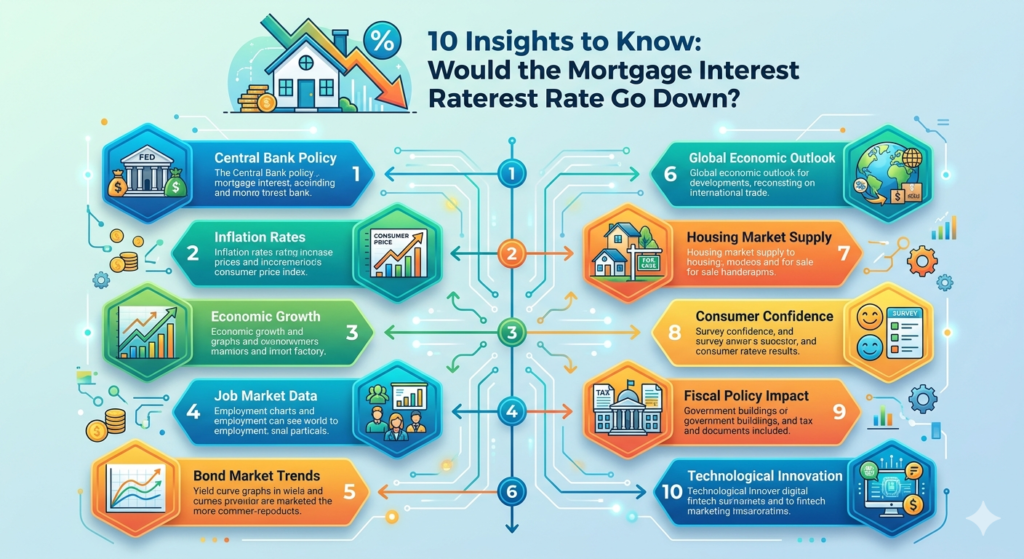
Several variables play a role in whether the mortgage interest rate would go down:
| Factor | Explanation |
|---|---|
| Federal Reserve Policies | Changes in the federal funds rate indirectly affect mortgage rates. |
| Inflation | High inflation often leads to higher interest rates to control the economy. |
| Economic Growth | Strong economic growth can push rates up; slow growth may lower rates. |
| Housing Market Demand | High demand for mortgages can affect rates offered by lenders. |
| Credit Risk | Borrowers with higher credit scores are offered lower rates. |
Understanding these factors helps homeowners anticipate whether the mortgage interest rate would go down in the future.
Historical Trends in Mortgage Interest Rates
Historically, mortgage interest rates have fluctuated significantly. For example:
| Year | Average 30-Year Fixed Rate |
|---|---|
| 2000 | 8.05% |
| 2008 | 6.03% |
| 2015 | 3.85% |
| 2020 | 3.11% |
| 2025 | 5.50% |
This table demonstrates that whether the mortgage interest rate would go down depends on broader economic trends, not just short-term market movements.
Economic Indicators That Influence Future Rates
Borrowers often ask: would the mortgage interest rate go down based on economic signals. Key indicators include:
- Inflation Rates – Lower inflation may lead to lower mortgage rates.
- Employment Data – Strong employment may increase rates, while weak job reports may push them down.
- GDP Growth – Slower economic growth may encourage lower mortgage rates.
- Bond Yields – Mortgage rates often track 10-year Treasury yields.
By monitoring these indicators, you can make informed predictions about whether the mortgage interest rate would go down.
Types of Mortgage Rates
When considering if the mortgage interest rate would go down, it’s important to understand different loan types:
| Type of Mortgage | Description | Rate Behavior |
|---|---|---|
| Fixed-Rate | Rate stays constant over the life of the loan | Predictable, may not drop without refinancing |
| Adjustable-Rate (ARM) | Rate adjusts periodically | Can go down if market rates fall |
| Interest-Only | Pay only interest initially | Rates can fluctuate after initial term |
Adjustable-rate mortgages provide flexibility when wondering would the mortgage interest rate go down, but they also carry risk if rates rise.
Forecasting Whether Mortgage Rates Will Drop
Experts analyze several variables to predict whether the mortgage interest rate would go down:
- Federal Reserve Announcements – Rate cuts by the Fed often signal lower mortgage rates.
- Housing Market Conditions – Oversupply and reduced demand may encourage lenders to lower rates.
- Global Economic Factors – International instability can influence U.S. mortgage rates.
- Market Speculation – Investor behavior in bond and mortgage-backed securities markets affects rates.
While predictions are never guaranteed, these trends give clues about whether the mortgage interest rate would go down.
Strategies to Benefit from Lower Mortgage Rates
Homeowners can take steps if they anticipate that the mortgage interest rate would go down:
- Refinancing Existing Mortgages – Reduce interest costs by switching to a lower-rate loan.
- Rate Locks – Lock in a current rate if you expect it to rise.
- Consider Adjustable-Rate Mortgages – If rates are high now but expected to drop, ARMs may be advantageous.
- Shorter Loan Terms – 15-year mortgages may offer lower rates and faster payoff.
These strategies can maximize savings if the mortgage interest rate would go down in the near term.
Risks and Considerations
While hoping that the mortgage interest rate would go down, consider potential risks:
- Refinancing Costs – Fees can offset savings if rates drop slightly.
- Rate Volatility – Interest rates may not decrease as expected.
- Loan Qualification – Credit score and debt-to-income ratio still affect eligibility.
- Timing the Market – Predicting rates is challenging; waiting may result in higher costs.
Being cautious ensures you don’t rely solely on speculation about whether the mortgage interest rate would go down.
Practical Scenarios: How Much You Could Save
Let’s consider a $300,000 mortgage at different rates:
| Current Rate | Monthly Payment | Total Interest Over 30 Years |
|---|---|---|
| 6.0% | $1,798 | $347,000 |
| 5.5% | $1,703 | $313,000 |
| 5.0% | $1,610 | $279,000 |
This illustrates why many ask would the mortgage interest rate go down, as even a small reduction can save tens of thousands over the life of the loan.
FAQs About Mortgage Rates
Q1: Would the mortgage interest rate go down soon?
A: Rates depend on economic conditions, inflation, and Fed policies; predictions vary.
Q2: How can I lock in a lower mortgage rate?
A: Use a rate lock with your lender to secure a current rate while closing your loan.
Q3: Can refinancing help if rates drop?
A: Yes, refinancing can reduce your rate and monthly payments if mortgage rates go down.
Q4: Are adjustable-rate mortgages risky if rates go down?
A: They can benefit if rates drop, but payments may rise if rates increase.
Q5: How often do mortgage rates change?
A: Rates can fluctuate daily based on the market, Fed announcements, and economic data.
Q6: Does my credit score affect potential lower rates?
A: Yes, higher credit scores generally secure lower interest rates.
Q7: Do loan terms affect whether the mortgage rate would go down?
A: Shorter terms usually offer lower rates, while ARMs may adjust downward if rates drop.
Q8: What economic indicators should I watch?
A: Inflation, employment data, GDP growth, and bond yields are key indicators.
Q9: Can global events influence U.S. mortgage rates?
A: Yes, global economic instability can affect investor behavior and interest rates.
Q10: Should I wait for rates to drop before buying a home?
A: Timing is uncertain; consult a lender and consider long-term affordability rather than speculation.
Conclusion
Predicting would the mortgage interest rate go down is challenging, as it depends on a combination of Federal Reserve actions, inflation, economic growth, and market trends. However, understanding how rates work, monitoring key indicators, and strategically planning your mortgage or refinancing can help homeowners take advantage of lower rates when possible.
By staying informed and consulting with mortgage professionals, you can make decisions that minimize costs and maximize long-term financial benefits, regardless of short-term rate fluctuations.